What It Is
The demands of modern work take a measurable toll on how we think, relate and lead. These demands include:
- Sustained pressure
- Rapid change
- Constant cognitive load
Our capacity to regulate emotions, manage internal states and sustain cognitive performance is not fixed. It is trainable. Research from U-M and the emerging field of mental fitness science supports this potential.
This session was developed in partnership with the U-M Institute for Mental Fitness. It will introduce mental fitness as a set of evidence-based, trainable capacities for emotional regulation. These capacities support functioning across individuals, teams and organizations. The emphasis is not on managing stress as an endpoint. It is on building the psychological and cognitive foundation for sustained, high-quality performance.
What You'll Learn
This session will draw on research in:
- Emotion regulation
- Interpersonal neurobiology
- Organizational behavior
We will examine mental fitness at three levels:
- Self
- Relationships and teams
- Culture and organizations
You will explore how unmanaged cognitive interference, relational friction, and organizational stressors degrade judgment, collaboration and well-being. And, more importantly, what can be done about it.
You will leave with:
- A clearer understanding of your own mental fitness baseline
- Evidence-based tools for regulating thought and emotion in high-pressure situations
- A framework for strengthening the conditions in which those around you can do the same
How It Can Support Your Growth
The science is clear: foundational health, cognitive performance, and psychological longevity are not incidental to great work. They are preconditions for it. This session offers practical starting points to build mental fitness. It is valuable whether your role is primarily individual, managerial or institutional.
Audience:
Any U-M faculty or staff member who would like to build mental fitness to improve workplace relationships and productivity
Program Note:
This session is part of Lead Forward, a webinar series open to faculty and staff across all three campuses and Michigan Medicine.
Presenter:
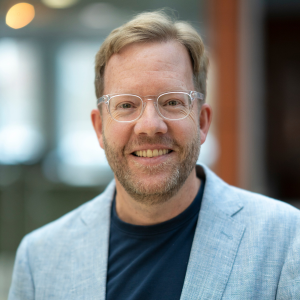
Kevin Thompson is a lecturer and previous Executive in Residence at the Ross School of Business. He teaches InterMission, an undergraduate self leadership course for students adrift in a sea of expectations who are exceptional at fulfilling goals set by others but find themselves too busy to reflect on whether they're the right thing to do. The course transitions from the classroom to the field on a one-week wilderness immersion in Utah's Canyonlands with the National Outdoor Leadership School.
Kevin's day job involves serving as the chief operating officer (COO) of the Global Enabling Sustainability Initiative (GeSI.org). GeSI's mission is to lead the movement that defines, demonstrates, and takes action on the enabling role of digital solutions in sustainability.
Kevin has a 25 year executive career of diverse experiences ranging from managing a farm in a remote West African village to programs with multinational corporations in industries from big tech to impact media. He is an internationally recognized social intrapreneur.
For 15 years, Kevin worked at IBM in eight positions of increasing responsibility and scope in strategy, corporate citizenship and marketing. While at IBM, Kevin led the design, launch and scaling of IBM's Corporate Service Corps (CSC), which placed 5,000 IBMers from 60+ countries on month-long, onsite assignments in 32 low-income countries, working with nonprofits, universities, government agencies, and small business owners.
Most recently, Kevin served as the General Manager for GOOD Worldwide and Upworthy, a leader in social impact, sustainability and engagement at scale.
Mr. Thompson is a First Mover Fellow with the Aspen Institute, the subject of a Harvard Business School case study and winner of a FrED Forum innovation award.
Topic Area
- Career and Professional Development
- Conferences and Special Events
- Leadership Development
Domain and Expectation
-
People
- Foster and build collaborative relationships
-
Self
- Adapt
-
Execution
- Build positive culture
Role
- Member of a Team
- Leading a Team
- Leading Multiple Teams
- Leading the Organization
Level
- Level 1: Awareness