When you’re looking for a home, you’ll hear the term “good bones.” If a house has good bones, it is structurally sound and built to persevere.
Human bones are different. They gain mass throughout childhood and adolescence, as old bones are continuously broken down and replaced with new bone.
“Peak bone mass is generally achieved in the late 20s, followed by gradual, age-related bone loss,” said Shubham Kalwani, DO, assistant professor in the U-M Department of Family Medicine and Department of Obstetrics and Gynecology. “Bone loss commonly accelerates during the menopause transition and early post-menopause, increasing the risk of osteoporosis and fractures.”
Osteoporosis affects millions of U.S. adults aged 50 and older, with women accounting for approximately 80% of cases.
To elevate awareness about menopause and encourage support, Kalwani will host a free webinar, “Navigating Menopause Together,” with Natalie Saunders, MD, associate professor of obstetrics and gynecology at Michigan Medicine. Kalwani and Saunders are Menopause Society-certified practitioners.
Supporting Bones During and After Menopause
Lifestyle enhancements, including exercise and nutrition, can have a significant impact on bone health.
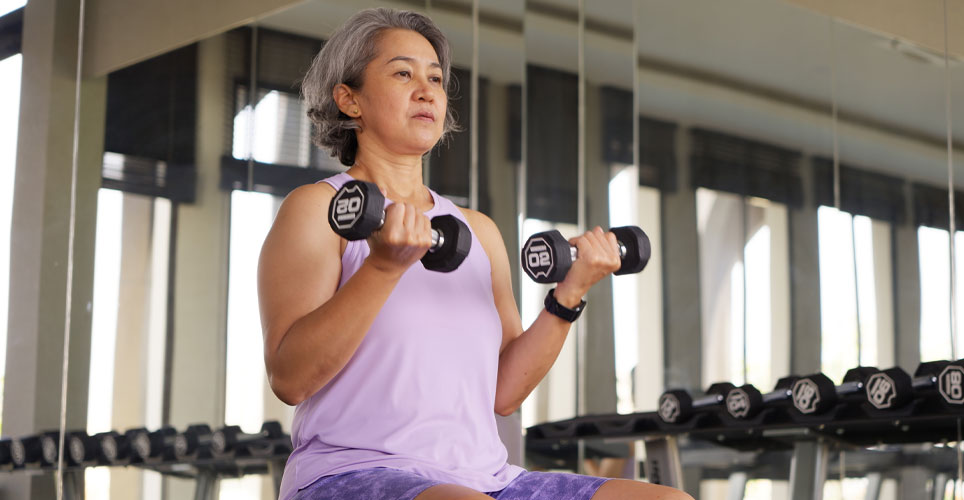
“Weight-bearing exercise and getting adequate dietary calcium and sufficient vitamin D are foundational parts of supporting bone health,” Kalwani said. "Weight-bearing activities such as brisk walking, stair climbing and dancing, along with muscle-strengthening exercises using weights, resistance bands and body weight, should be part of a lifestyle plan to support your bones."
Additional exercises, including aerobic exercise, stretching, balance training and mind-body activities such as yoga and tai chi, can also support cardiovascular health, mobility and mental well-being.
Nurturing Bones through Nutrition
Along with exercise, good nutrition can help patients maintain strong bones. The following foods and drinks are considered beneficial for bone health:
-
Milk, yogurt, cheese, calcium-set tofu and canned salmon or sardines with edible bones are good sources of calcium and protein. Many plant-based milks are fortified with calcium and vitamin D, but amounts vary, so check the label.
-
Fish, poultry, lean meat, eggs, beans, soy, nuts and seeds provide protein, which helps maintain muscle.
-
Kale, collard greens, bok choy and broccoli provide vitamin K and other nutrients that support bone health.
-
Almonds, chia seeds and other nuts and seeds provide calcium, protein and magnesium, which support healthy bones and muscles.
Medical Management of Bone Health
A doctor may recommend bone-density testing based on age, menopausal status and individual fracture risk. Routine screening is generally recommended for women beginning at age 65, although earlier testing may be appropriate for post-menopausal women with increased fracture risk.
Risk factors, Kalwani said, include a prior fragility fracture, low body weight, long-term corticosteroid use, parental history of hip fracture, and certain medical conditions.
“We use a DXA scan, which concentrates a very low dose of X-rays to measure bone-mineral density, usually at the hip and spine,” she said.
Treatment is based on a patient’s overall fracture risk, considering bone density, age, previous fragility fractures, medication use and other medical conditions.
“When medication is indicated, options may include oral or intravenous bisphosphonates, denosumab, selective estrogen receptor modulators or bone-building medications," Kalwani noted.
“Menopausal hormone therapy can also help prevent bone loss and fractures in targeted patients, particularly those who are considering treatment for bothersome menopausal symptoms. Each treatment has specific benefits, risks and duration considerations that should be discussed with a doctor.”
Part five of this series, “After Perimenopause: What Now?” will be published on Tuesday, Nov. 10.